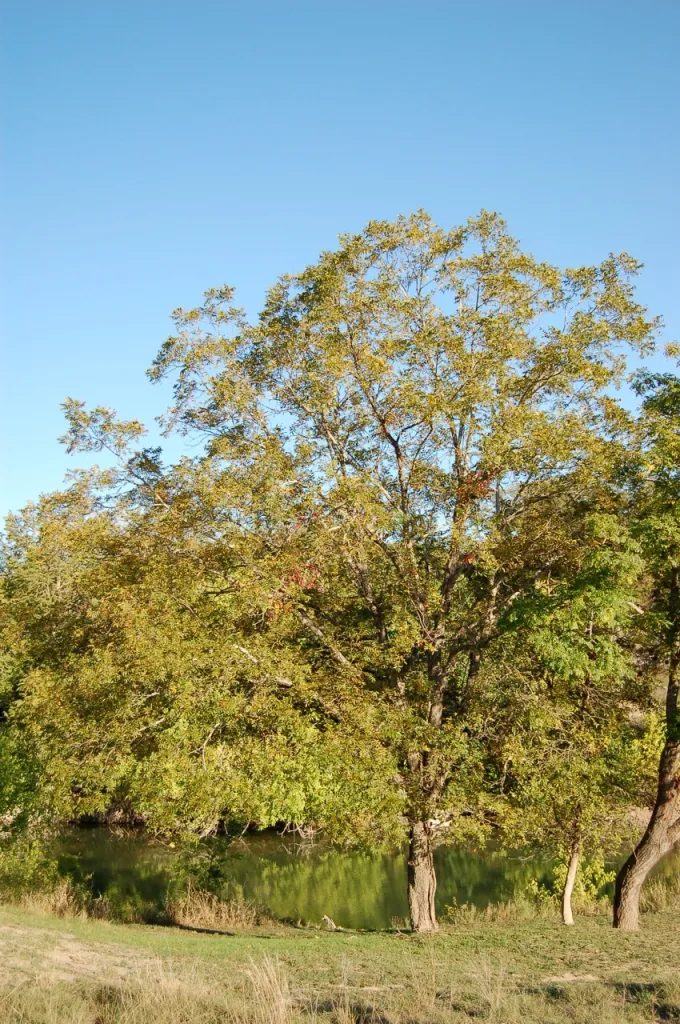
Pecan is one of the most common large trees along Central Texas creek bottoms, and for restoration purposes it’s valued for the same reasons it’s valued everywhere else: a long lifespan, a deep and wide-spreading root system, and a tall canopy that anchors a floodplain for generations.
Because pecan tolerates periodic flooding and thrives in the deep, well-drained alluvial soil found on the inside of creek bends, it’s typically planted on the outer edge of a riparian buffer alongside cedar elm and sycamore, where it will eventually form part of the mature overstory. Its nut crop is also a meaningful food source for squirrels, deer, and waterfowl using the corridor.