Rebuild the living buffer between Central Texas and its water supply.
The Texas Riparian Project restores native riparian plant communities along Hill Country waterways and rivers to protect water quality, streambank stability, and recharge to the Edwards Aquifer.
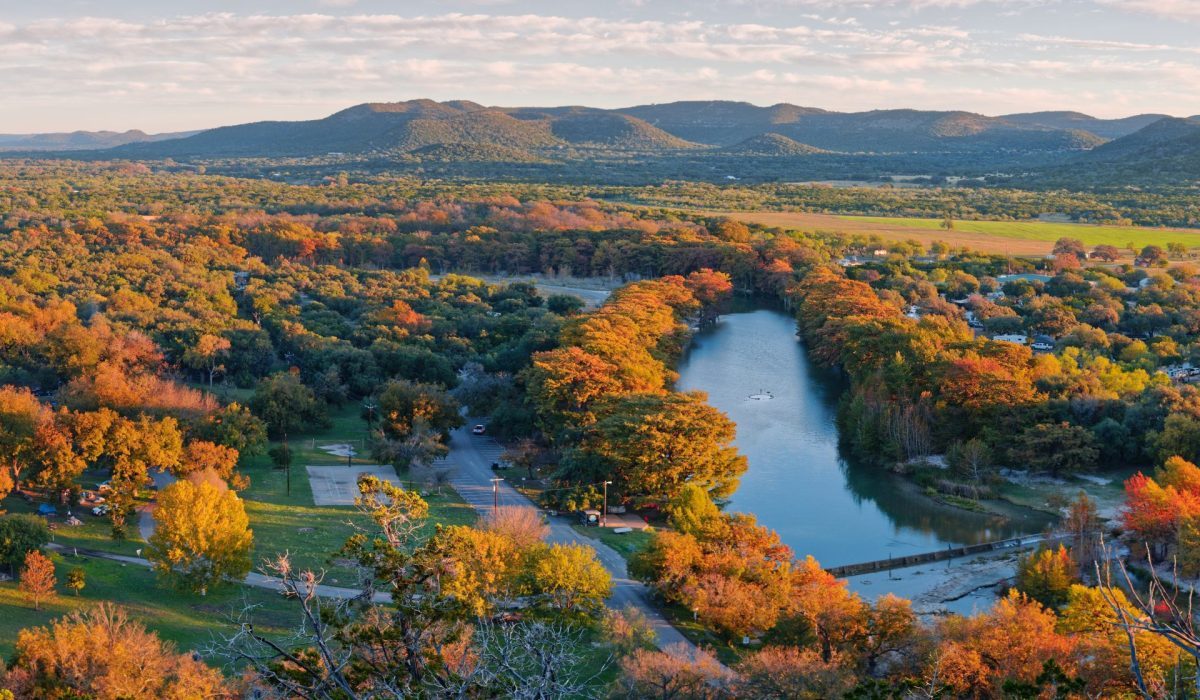
Central Texas's waterways carry rainfall across the Edwards Aquifer's recharge zone — what lines their banks decides what reaches the water below.
Mission
We restore and protect the riparian corridors of the Edwards Aquifer watershed by planting native trees, shrubs, and grasses along Central Texas waterways and rivers; removing the invasive species that crowd them out; and equipping landowners and volunteers with the knowledge to keep those corridors healthy for the long term.
Vision
A Hill Country where every major waterway feeding the Edwards Aquifer is bordered by an intact, native riparian buffer — clean, cool, shaded water; stable banks that hold through flood; and a public that understands the direct line between the trees on the bank and the water in the tap.
Why we exist
Central Texas is one of the fastest-growing regions in the country, and it sits directly on top of the Edwards Aquifer's recharge zone — the exposed limestone where surface water becomes groundwater. As ranchland and cedar brakes give way to subdivisions and pavement, the native vegetation that once lined every waterway has been cleared for lawns, roads, and riverfront lots.
The result is faster, dirtier runoff; eroding banks; warmer water; and less time for rainfall to soak into the aquifer before it's gone downstream. Riparian restoration is one of the few interventions that works directly on both problems at once — water quality and water quantity — using nothing more complicated than the right plants in the right place.
From bare bank to established buffer
Watershed assessment
We work with counties, river authorities, and landowners to identify waterway segments where riparian loss is actively degrading bank stability, water quality, or recharge — prioritizing sites within the Edwards Aquifer contributing and recharge zones.
Site design
Every site gets a planting plan matched to its bank slope, flood frequency, and existing canopy — drawing from our native plant database rather than a one-size-fits-all mix.
Invasive species removal
Chinaberry, ligustrum, Johnson grass, and other aggressive non-natives are cleared ahead of planting so new natives aren't competing for light, water, and root space from day one.
Community planting
Volunteers, students, and landowners install the plan on the ground — typically bare-root trees and container plants set during the cooler, wetter planting windows of fall and early spring.
Monitoring & stewardship
We return to each site for at least three growing seasons to check survival, water young plantings through drought, and keep invasive regrowth in check until the buffer can hold its own.
Hill Country counties within the Edwards Aquifer watershed
Our project area follows the contributing and recharge zones of the Edwards Aquifer (Barton Springs and San Antonio segments), where waterway health has the most direct effect on aquifer supply.
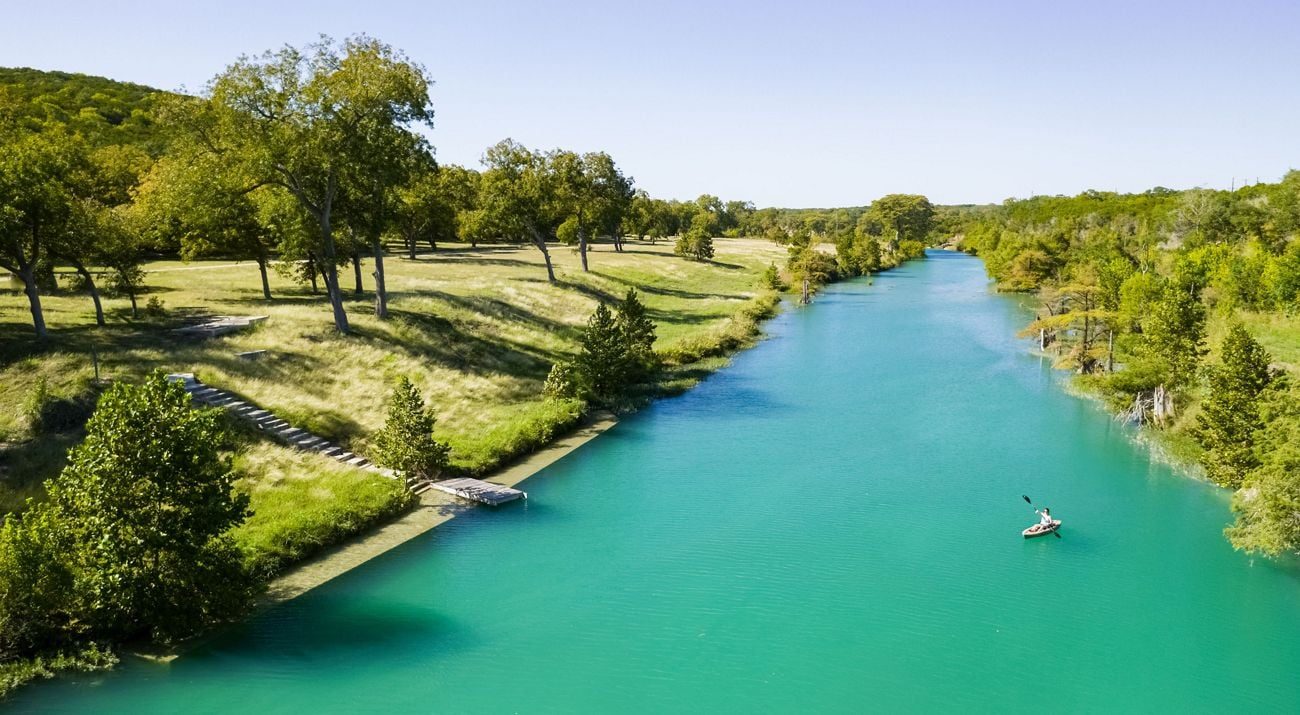
This is the kind of frontage we work with — privately owned, publicly important, and almost entirely without a dedicated restoration effort until now.
A note on where we're starting
The Texas Riparian Project is forming now, out of the same problem playing out on waterway after waterway across the Hill Country: nearly all of the region's waterway frontage is privately owned, and almost none of it has anyone actively working on restoration. We're starting with a small number of landowners and volunteers and a clear, focused plan — not an existing track record, but a method we intend to prove out site by site.
Our commitments
We plant only regionally native, non-invasive species. We work with landowners on their terms, never requiring public access as a condition of assistance. We publish our planting locations and species mix so our work is verifiable, and we measure success by survival rates, not trees ordered.