A planted buffer is only as strong as what's kept off of it.
Feral hogs and axis deer are two of the biggest threats to riparian restoration in the Hill Country — not because they're dramatic, but because they quietly undo years of planting and bank stabilization work. Managing them is now a standing part of every restoration site we run.
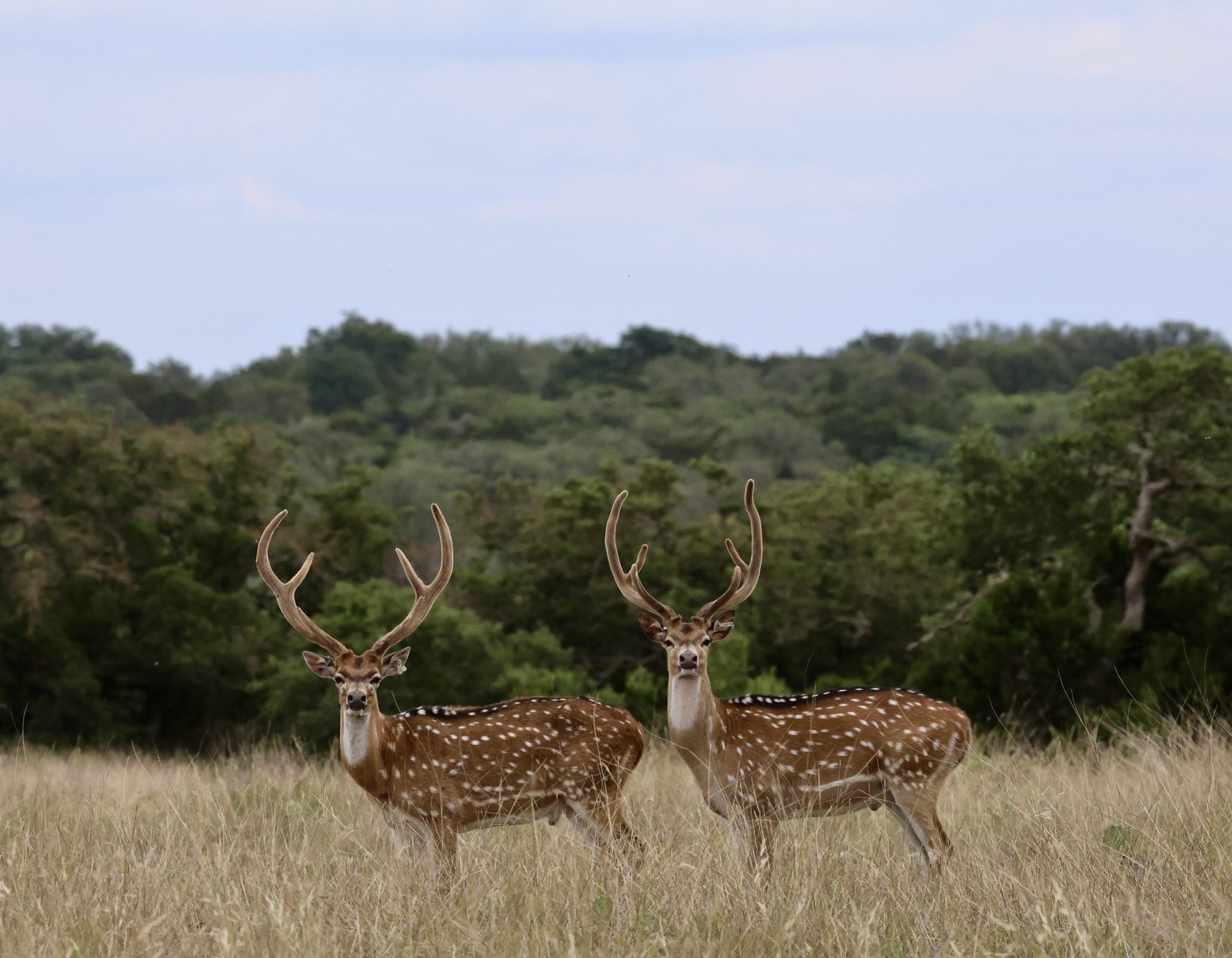
Axis deer, an introduced species now established across the Hill Country.
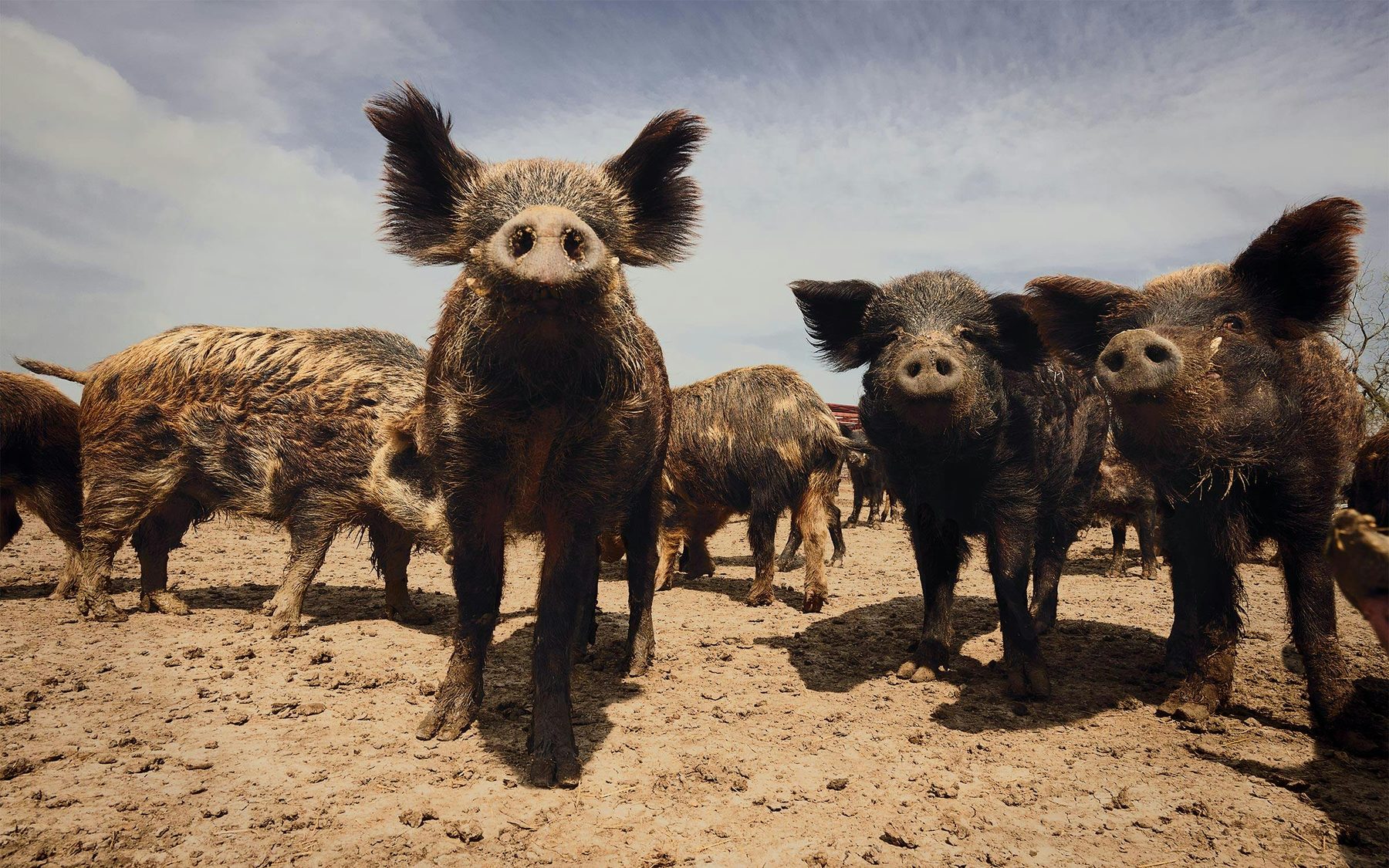
Feral hogs
Sus scrofa
Feral hogs root through moist streamside soil searching for grubs, roots, and bulbs, tearing up the exact ground cover and young plantings a riparian buffer depends on. On a restoration site, a single night of rooting can shred a season's worth of grass and sedge plugs and expose bare soil to the next rain event — undoing the erosion control those plantings were installed to provide.
Hogs also wallow directly in and along waterway channels, churning banks, clouding water, and depositing waste close to the water's edge — a direct water quality concern in a watershed that recharges the drinking water supply.
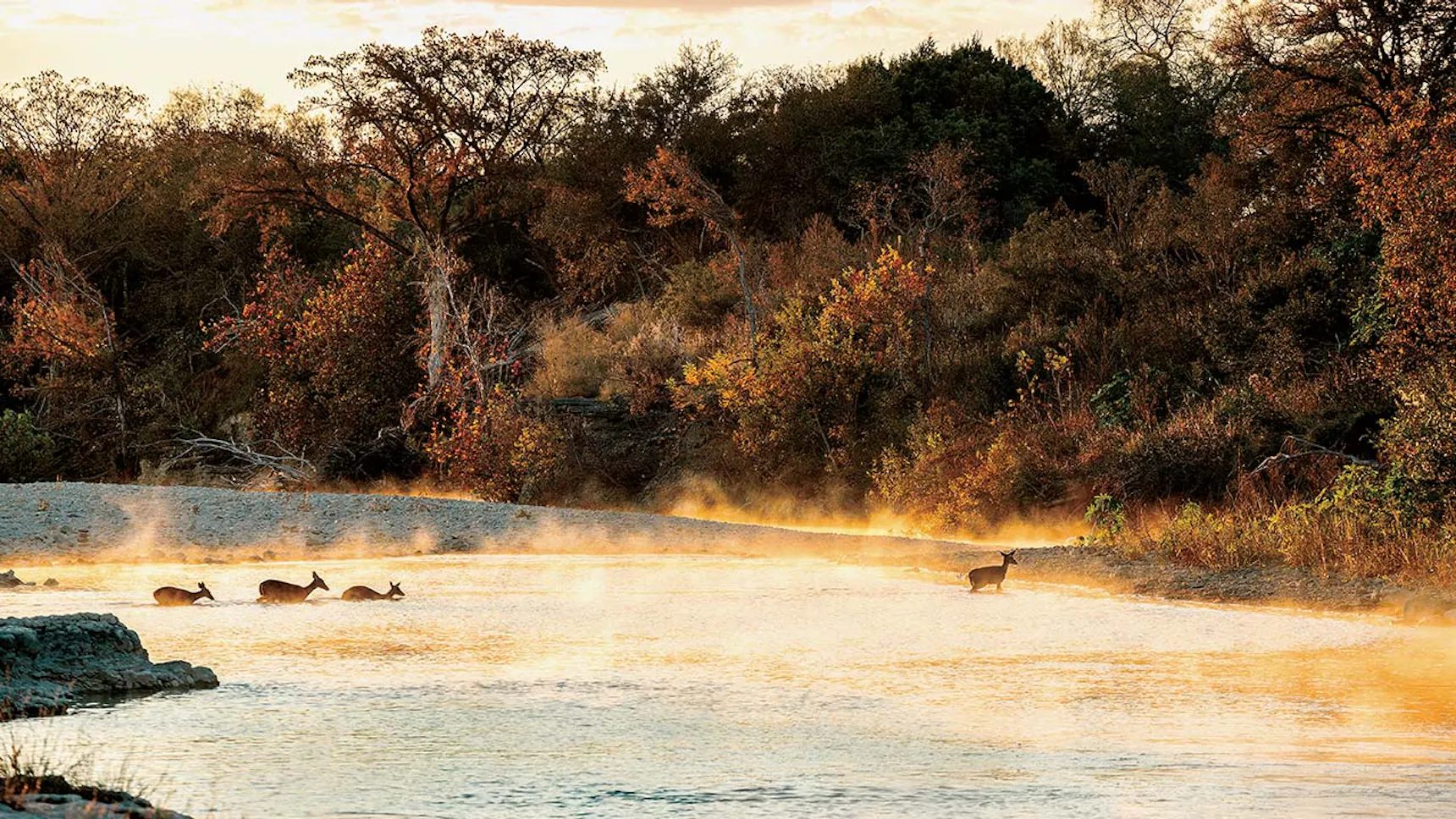
Axis deer
Axis axis
Axis deer are an introduced species, established in the Hill Country from ranch releases decades ago, that now compete directly with native white-tailed deer (pictured) and browse far more heavily on new growth. Unlike hogs, axis deer don't tear up the ground — they eat the plants before they can establish.
Young cypress, cedar elm, and buttonbush plantings are especially vulnerable in their first two growing seasons, when a single herd passing through a restoration site can strip every leader shoot and set survival back by a year or more.
Unmanaged wildlife pressure is one of the top causes of planting failure we see
Wildlife pressure is a well-documented cause of restoration failure across the Hill Country: unprotected plantings on sites with active hog rooting or heavy axis deer browse tend to see much lower first-year survival than sites with exclusion measures in place. That's why we're planning wildlife management into every site from day one — alongside species selection and bank grading — rather than treating it as an afterthought once a planting is already struggling.
How we protect a site through establishment
Site assessment
Before planting, we walk each site for hog rooting, wallows, deer trails, and browse lines to gauge pressure and plan protection accordingly — some waterway segments need little intervention, others need a full exclusion plan.
Tree shelters & browse cages
Newly planted trees and shrubs are fitted with mesh tree shelters or welded-wire cages tall enough to stop axis deer browse, removed once a tree's leader has grown above browse height.
Temporary exclusion fencing
On sites with heavy hog activity, we install low-tensile electric or hog-panel fencing around newly seeded grass and sedge areas until root systems are established enough to tolerate some disturbance.
Coordinated trapping
We work with landowners and licensed trappers on corral-trap programs timed ahead of planting season, since removing a sounder before installation is far more effective than protecting plants after the fact.
Monitoring
Trail cameras and quarterly site walks let us track hog and deer activity over time, so protection measures can be scaled back once a planting is established and scaled up if pressure increases.
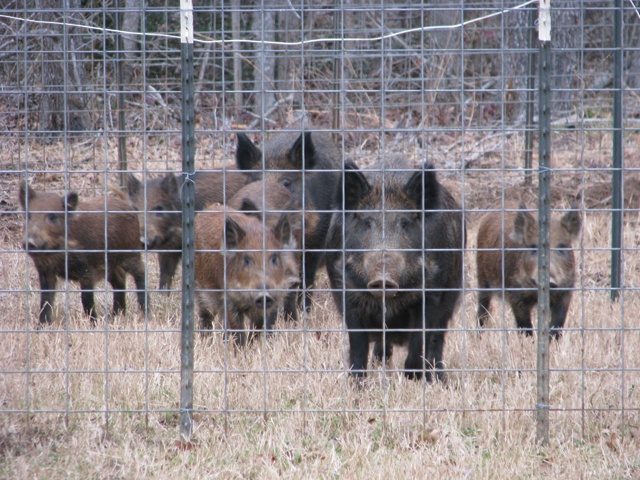
A corral trap catches a whole sounder at once — far more effective than removing individual hogs after damage is already done.
Partners & resources
We coordinate with Texas Parks & Wildlife Department biologists, USDA APHIS Wildlife Services, and county AgriLife Extension offices on trapping programs, landowner cost-share options, and current best practices for feral hog and axis deer management in the Hill Country.
For landowners
If hogs or axis deer are active on waterway frontage you're restoring or considering restoring, our free site visit includes a wildlife pressure assessment alongside the planting plan — so protection measures are budgeted in from the start rather than added after a failed planting.
Request a site visitHelp protect an active restoration site
Trap-day and tree-shelter installation volunteers are always needed alongside our regular planting crews.